

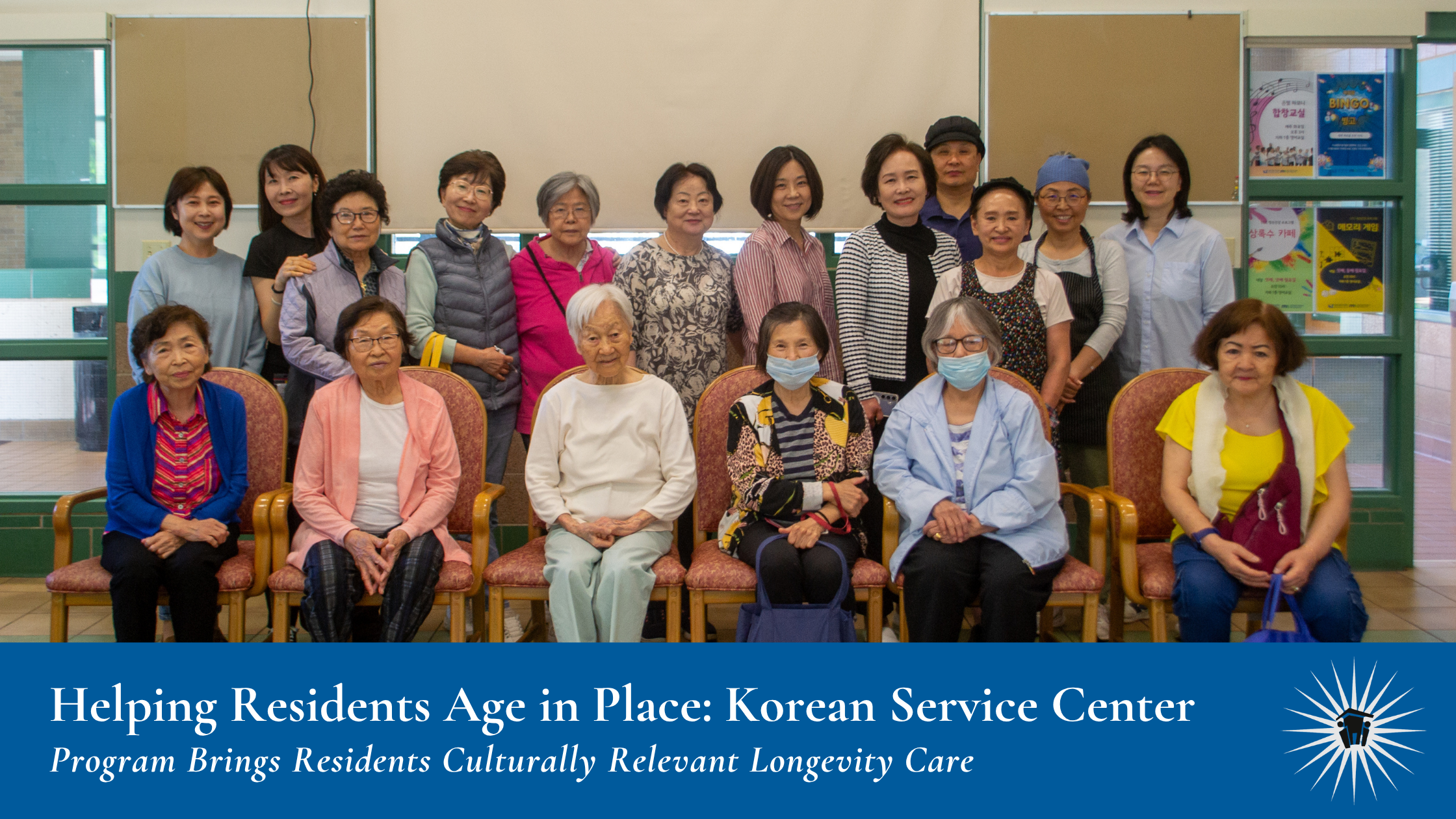
For 35 years, the Korean Service Center (KSC) has helped residents age in place at MPHA’s Cedar High Apartments by providing culturally responsive, holistic support. From social services and in-home care to transportation and daily meals, KSC meets residents where they are and helps them remain independent.
“We are the one-stop shop for older Korean adults coming to Minneapolis,” said Kwangja Kwon, Executive Director of the Korean Service Center. “These residents rely on our daily routines and care to continue living here. We provide services that help them feel safe, supported, and at home.”
The organization began in 1989 after an MPHA intern recognized the need for a bridge between Korean residents and the social services they depended on. The Korean Service Center initially focused on helping Korean immigrants adjust to life in Minneapolis by offering English classes, citizenship application assistance, and a meal program.
Today, KSC continues to help residents navigate language and cultural barriers—no matter where they are from. Staff assist with housing applications, connect residents to social services, and partner with MPHA to complete annual housing recertifications. Center staff also provide transportation to medical appointments, helping residents navigate healthcare facilities and offering interpretation services along the way.
“Previously, when elderly residents received recertification paperwork, they didn’t know what to do with it,” Kwon said. “We help them gather the required documents and make sure everything gets back to MPHA. Our collaboration with MPHA is incredibly valuable because it makes a real difference for the residents.”
In 1999, KSC opened Grace Place, the nation’s first assisted living program for Korean Americans, located on MPHA’s Cedar High campus. With staff on-site, Grace Place supports dozens of older adults and people with disabilities through home care services, daily meals, and engaging social activities that help residents age in place.
Residents receive three traditional Korean meals every day of the year, with some ingredients grown in on-site gardens. The organization also promotes mental, physical, and social well-being through programs such as afternoon tea, art classes, weekly bingo, a community choir, walking groups, tai chi, and yoga. In 2025, a Highrise Health Alliance mini-grant helped fund a community choir performance.
As residents’ care needs grew, KSC launched the Sunflower Program in 2013 to provide 24-hour support on a dedicated floor of Cedar High. The program offers assistance with bathing, housekeeping, medication management, and other daily needs, allowing residents to remain in the community they call home. With the average participant now 87 years old, the program has become increasingly vital.
“The Korean Service Center has been an exceptional and long-term partner,” said Mary Boler, Director of Operations at the Minneapolis Public Housing Authority. “Their dedication and compassion in providing quality services to MPHA residents has enriched the lives of so many people, residents and staff alike.”
For many MPHA residents, KSC staff have become like family. They provide meals, transportation, personal care, and companionship while treating every resident with dignity and respect. For MPHA, the partnership ensures residents have the support they need to remain healthy, connected, and safely housed for years to come.
