

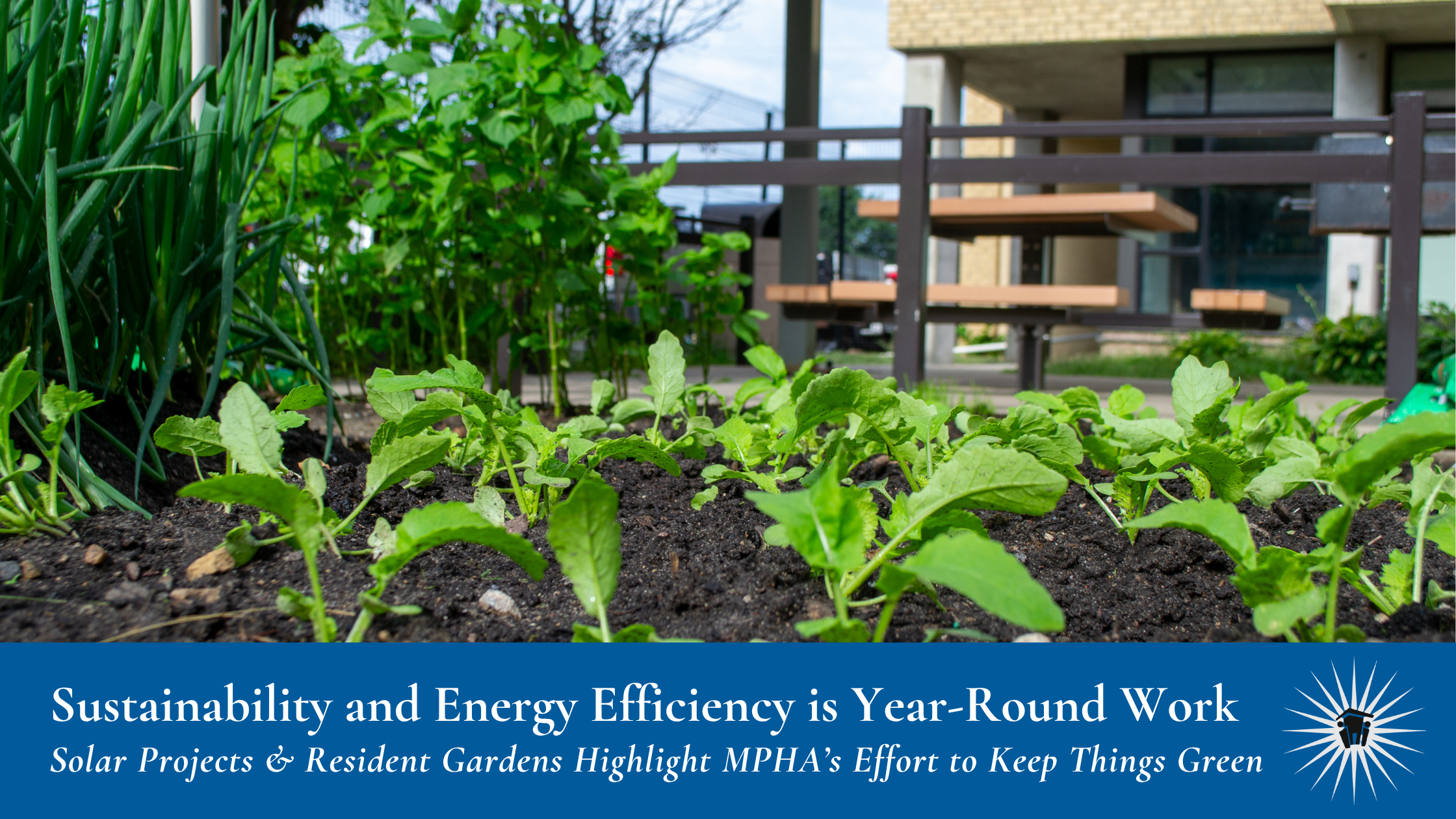
Whether its incorporating energy efficient solutions in building developments or supporting resident-led community gardens, MPHA is committed to being a good steward of the environment and working to reduce its carbon footprint. Here are just a few ways MPHA is prioritizing environmental sustainability:
Building with an Eye on Sustainability
In 2023, MPHA celebrated the grand opening of the modular construction, Family Housing Expansion Project that brought 26 two- and 58 three-bedroom units across 16 multiplexes in Minneapolis. This project incorporates modular design, rooftop solar panels, and a variety of other energy efficiency, health, and green measures to meet the Minnesota Enterprise Green Communities criteria.
This project provided MPHA with a blueprint for delivering more sustainable family housing. Both building project waste and neighborhood disruption was reduced by using modular building design because the structures were mostly built in an off-site manufacturing facility rather than on-site. Each building leverages a 22.6 kW rooftop solar which generates enough energy to cover an estimated 30 percent of the buildings’ electrical usage and provide energy cost savings.
More recently, MPHA broke ground on two new multiplexes replacing high-needs, long vacant single-family homes. The project will bring three four-bedroom and two two-bedroom family units to South Minneapolis. Both the multiplexes will be all-electric and energy efficient, including rooftop solar arrays on the homes. Prioritizing these sustainable features is both financially smart and responsible for the agency.
Greening Up High-Rises with Resident Gardens
Every spring, MPHA residents across the city do their part to steward the local environment through gardening. These gardens support local wildlife, provide food for the community, and brighten up the neighborhood.
At Oliver Manor, residents have worked with the University of Minnesota Extension program to help maximize their space over the past few years. Master gardener volunteers plan, plant, maintain, and harvest vegetables, herbs, and flowers. After expanding their gardens last year, the group is looking to maintain the bed space this year.
At the Cedar High Apartments, residents team up with the Korean Service Center (KSC) to bring their many garden beds to life. The residents maintain vegetable gardens and pass along the harvest to KSC to incorporate into the meals they prepare and provide to residents participating in their program.
As part of the Highrise Health Alliance (HHA)’s mini grant program in 2025, several buildings—Lyndale Manor, Art Love Manor, Lowry Towers, and The Riverside—received funding to invest and expand their buildings’ community garden spaces. Raised beds were added at Lowry Towers and Lyndale Manor making the gardens more accessible to those with mobility issues. At the buildings that received mini grant funding, residents saw this community investment as a catalyst to work together, get to know each other better, and share in the success of their harvest.
MPHA is committed to prioritizing environmental sustainability around the year across its many functions. From supporting resident garden projects to weaving energy efficient initiatives into new builds and renovations, the agency is working to be a good steward of the local environment.
