

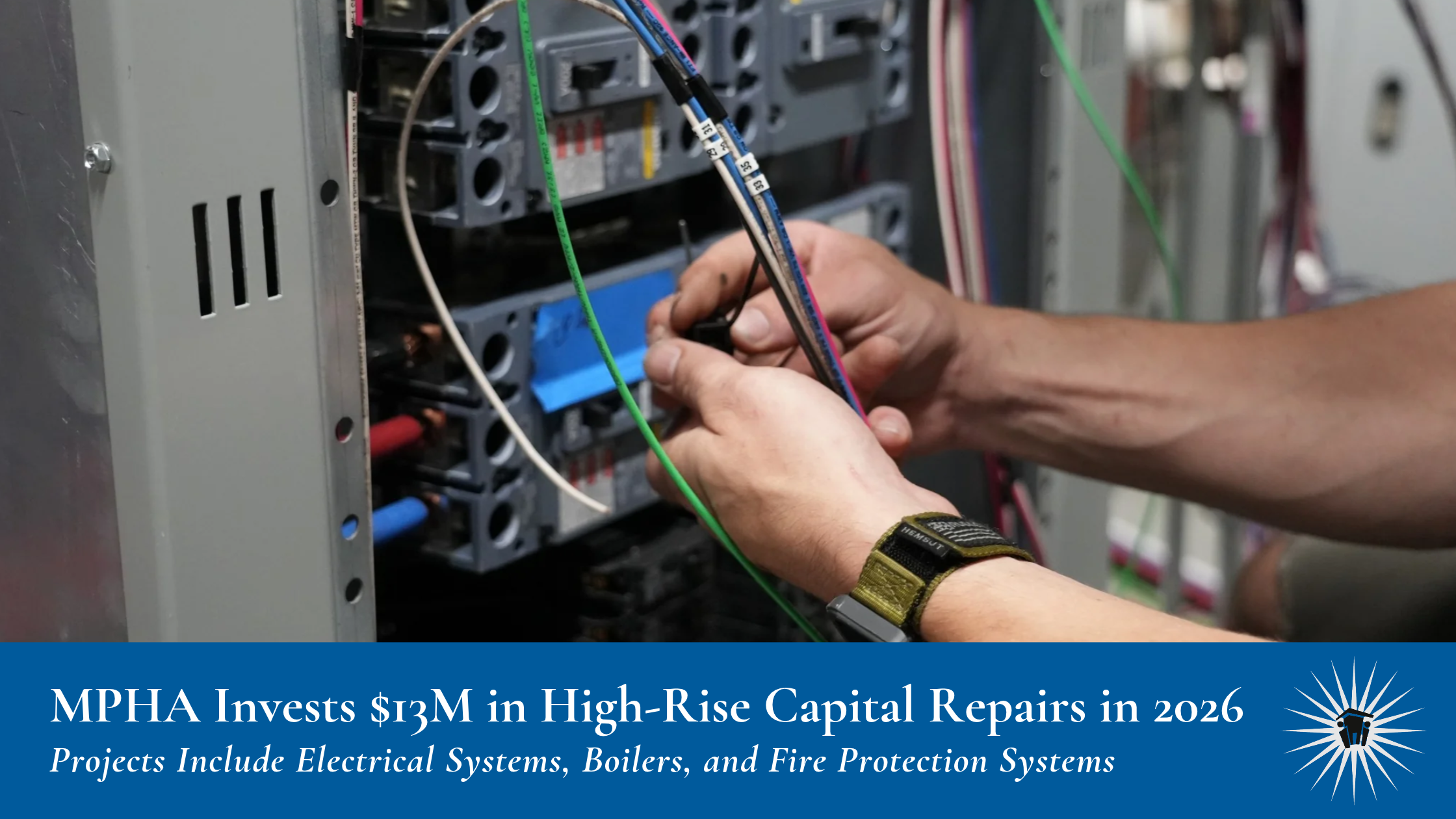
With construction season wrapping up for the year, many of MPHA’s 2026 high-rise projects have been completed. In 2026, MPHA invested more than $13 million in repairs across its 42 high-rises. Major projects include electrical system upgrades, boiler system replacements, roof and window replacements, fire protection system upgrades, elevator modernizations, and exterior façade restorations. This work helps MPHA maintain and improve critical building systems and infrastructure to ensure buildings can continue to serve the more than 5,000 residents who call one of MPHA’s 42 high-rises home.
While many buildings received some level of investment, eight high-rises had projects exceeding $1 million, including: Holland Highrise, Lowry Towers, Cedar High Apartments, Art Love Manor, Heritage Commons and all three Hiawatha Towers.
Holland Highrise
At Holland Highrise, $2.5 million in repair work is underway, scheduled to be complete by the end of 2026. This work included a replacement of the building’s original electrical switchgear and generator. The new generator and associated equipment will ensure backup power to critical building systems, in the case of a power outage. MPHA is also working on completing a roof replacement as the existing roof has exceeded its useful life. Holland Highrise is located at 1717 Washington Street Northeast.
Lowry Towers
At 315 North Lowry Avenue, Lowry Towers is receiving $2.8 million in systems and preservation projects that will carry into 2027. The building’s original electrical switchgear and generator are being replaced to ensure critical building systems are operational and support resident safety if regular electrical service is interrupted. Additionally, the fire pump and controller are scheduled to be replaced. To preserve Lowry Towers’ exterior, the facade and sealant are being replaced.
Hiawatha Towers
The three-building high-rise campus in the Ventura Village neighborhood, Hiawatha Towers, received more than $2.7 million in investments that included new roofing, the installation of fall protection features, and upgraded lightening protection systems. Hiawatha Towers is located at 2019 South 16th Avenue, 2121 South 16th Avenue, and 1700 East 22nd Street.
Cedar High Apartments
630 Cedar Avenue received $1.2 million in electrical component replacements this summer. The project replaced aging electrical equipment and improved the building’s ability to maintain essential services to the 191-unit high-rise during a power outage. This work was partially funded through Minnesota Housing’s Publicly Owned Housing Program.
Art Love Manor
MPHA’s Art Love Manor is receiving $1.5 million in systems and life safety improvements. The building’s fire alarm system is currently being replaced. Art Love Manor’s original electrical switchgear and generator are also being replaced as they have reached the end of their useful life. This work is scheduled to be completed this year. Art Love Manor is located at 800 North 5th Avenue.
Heritage Commons
At Heritage Commons, more than $1 million in projects is completed or ongoing. The building’s elevators were recently modernized, which included new controllers, machines, and cab finishes. Additionally, MPHA is working to replace the building’s boiler and three hot water heaters that have exceeded their useful life. The boiler replacement project is expected to wrap up before the end of the year. This work was partially funded by the public housing tax levy. Heritage Commons is located at 350 Van White Memorial Boulevard.
These high-rise investments supplement MPHA’s $78 million redevelopment of Spring Manor rehabbing 221 units and building 15 new units. Additionally, the agency added five new family units in July and deployed more than $4 million in repairs to MPHA’s family housing portfolio in 2026.
Historically, HUD has only provided MPHA about 10 percent or less of the funding it needs to maintain its buildings. That means each year the agency is forced to choose band-aid options to triage leaky roofs, repair and maintain brick façades, replace inefficient 30-year-old windows, or replace original high-rise electrical and plumbing systems instead of more comprehensive—albeit more expensive—solutions. Over time, this problem has only compounded, creating the agency’s current capital backlog of $320 million in needs.
In recent years, agency staff have pursued and maximized just about every tool possible to address this funding gap. This includes seeking special budget permissions from HUD to develop localized solutions, creating new public-private partnerships to leverage debt financing and equity investments for major renovation projects (while maintaining strong guardrails to protect residents and public ownership), accessing project-based funding supports at every level of government, and pursuing one-time and ongoing financial supports from state and local governments, like the housing levy.
